
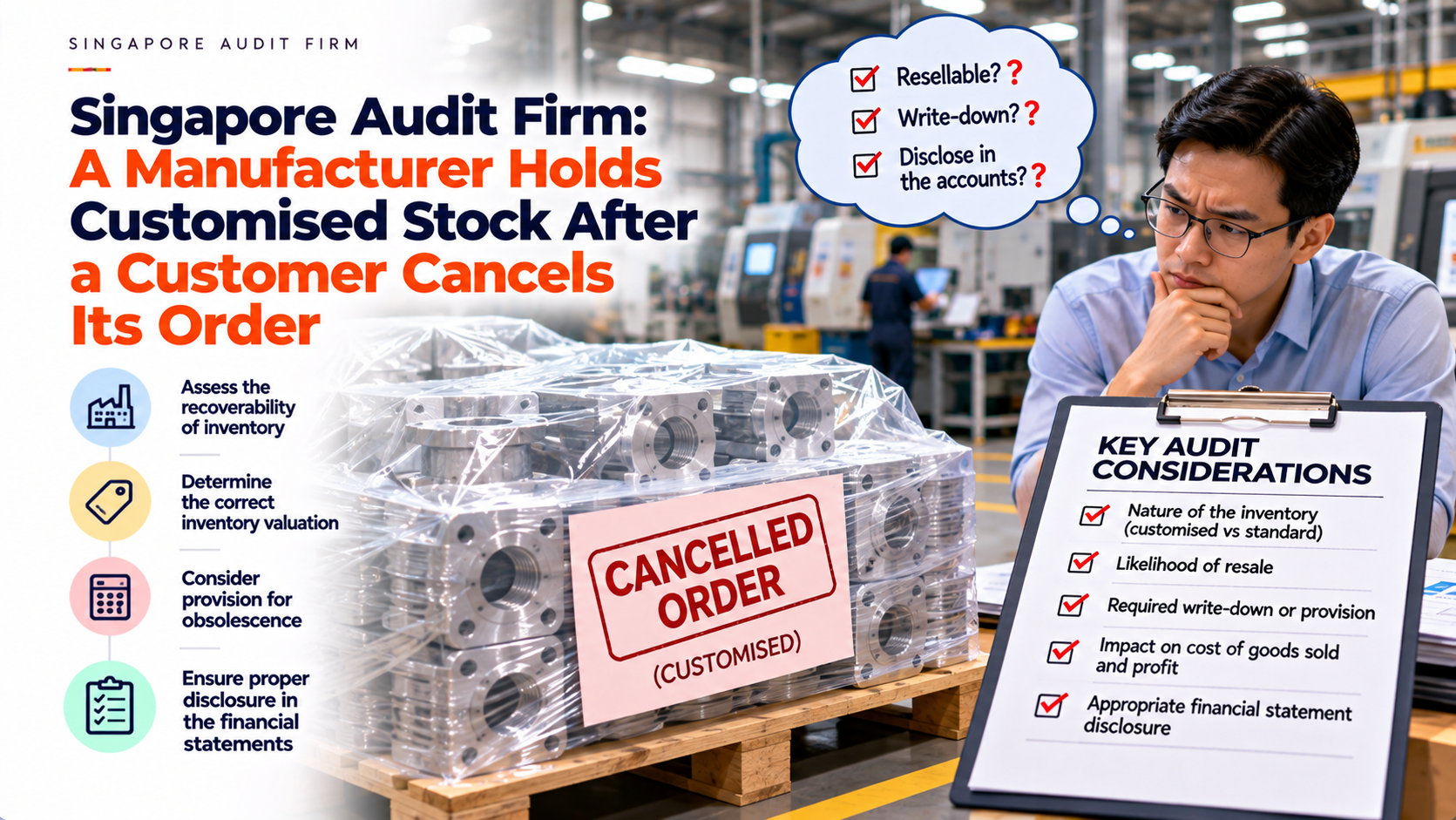
The production run was built around one customer’s specifications. Materials were purchased, components were modified and finished units were packed for delivery. Then the customer cancelled the order, leaving the manufacturer with goods that other buyers may not be able to use.
The stock remains in the warehouse and its production costs remain in the accounts. Management hopes to find another customer, recover compensation or adapt the goods for a different purpose. However, those possibilities need to be assessed before the original inventory value can continue to be supported.
For a manufacturer working with a Singapore audit firm, a cancelled order raises questions about ownership, cost and the amount recoverable from the remaining stock. Credon PAC provides audit and financial reporting services relevant to these accounting issues. A useful starting point is a clear record of the affected inventory and a realistic assessment of what can happen to it next.
Identify Exactly Which Stock Is Affected
A cancellation may affect more than the finished goods waiting for dispatch. Raw materials, partly completed units, specialised packaging and components held by subcontractors may all relate to the same order. Reviewing only the finished stock can leave a substantial part of the exposure unidentified.
Prepare an order-specific schedule showing quantities, locations, production stages and recorded costs. Reconcile it to the inventory records and identify any materials allocated to other active orders. This helps prevent the same stock from being counted as available for several customers.
The review should involve production and procurement as well as finance. These teams can explain which components are standard, which have already been modified and which purchases can still be stopped. Their input allows management to distinguish usable stock from items whose original purpose has disappeared.
Confirm Ownership and Contractual Rights
Physical possession does not establish the entire accounting position. Some materials may have been supplied by the customer, while other goods may be subject to contractual acceptance or ownership arrangements. The manufacturer needs to understand which items belong in its own inventory.
Review the customer agreement, purchase orders, amendments and cancellation correspondence. Establish what was agreed about completed goods, work in progress and materials purchased specifically for the order. Where the contractual position is disputed, obtain appropriate legal advice.
This article assumes that the affected goods remain the manufacturer’s inventory. Where the arrangement involves customer-controlled goods, revenue recognised over time or other contractual rights, a separate accounting assessment is needed. The cancellation should not lead to every balance being treated automatically as unsold finished stock.
Reconcile the Recorded Cost Before Assessing Recovery
A valuation review needs a reliable starting amount. Job records may contain estimated material usage, unfinished production postings or costs allocated using an outdated production plan. Those records should be reconciled before management decides how much of the balance is recoverable.
Check material issues, labour records and production overhead allocations against the relevant batches. Identify duplicate postings, costs belonging to other orders and differences between physical quantities and the system. Explain adjustments rather than incorporating them into one unexplained stock provision.
A well-supported cost schedule also helps management evaluate its commercial options. If the amount is unreliable, a proposed resale or reworking plan may appear more attractive than it really is. The business needs to know both what has already been spent and what further cash each option would require.
Apply the Inventory Valuation Principle
Under IAS 2, inventory is measured at the lower of cost and net realisable value. Net realisable value is the estimated selling price in the ordinary course of business, less estimated completion costs and costs necessary to make the sale. Management should apply the requirements of the company’s applicable reporting framework.
For customised goods, cancellation can undermine the assumptions that originally supported recovery of cost. The agreed customer price may no longer be available, and another buyer may require a substantial discount or modifications.
That does not mean every cancelled order requires a complete write-off. It means the remaining value needs support. The assessment should reflect the condition and realistic prospects of the goods, rather than the amount management originally expected to earn from the cancelled contract.
Test Whether Another Customer Can Actually Use the Goods
A statement that the stock “can be sold elsewhere” needs detail. Customised dimensions, branding, technical specifications or certification requirements may sharply limit the potential market. An item can be physically new and still have few commercially viable buyers.
Ask the sales team to identify potential customers and explain the basis for expected demand. Relevant support might include enquiries, comparable sales, written offers or an agreed replacement order. Distinguish an exploratory conversation from a customer commitment.
The quantity matters as much as the proposed price. A buyer willing to purchase a small trial batch does not necessarily support the same recovery assumption for the entire production run. Management should assess the remaining units and expected selling period separately where their prospects differ.
Include the Cost of Making the Stock Saleable
Reworking can create a recovery opportunity, but it may require additional cash. Removing branding, replacing components, testing revised products and repackaging units can reduce the amount ultimately recovered. Production staff should provide a practical estimate of the work required.
Consider a hypothetical batch with a recorded cost of S$120,000. A supported resale plan indicates proceeds of S$95,000, with S$15,000 needed for modifications and S$5,000 of necessary selling costs. Assuming these estimates represent the appropriate recovery assessment, net realisable value would be S$75,000.
The resulting write-down would be S$45,000. These figures exclude GST and assume the whole batch follows the same recovery route. The example illustrates why the prospective selling price alone is insufficient: the costs needed to achieve that sale also affect the inventory assessment.
Evaluate Reuse and Scrap Options Without Double Counting
Some cancelled stock can be dismantled and its components reused in normal production. Other items may only have scrap value. Production should identify which parts can be recovered, the expected yield and the work needed to make them usable.
Support a reuse plan with actual production requirements. Transferring components to another internal stock code does not itself establish that the business will consume them. If demand for the replacement product is weak, the same recovery problem may simply move to a different inventory category.
Keep alternative recovery routes separate. A unit cannot simultaneously support full resale proceeds and full recovery of its component value. Management should select a supportable route for the relevant quantities and explain how its assumptions fit the condition and intended use of the stock.
Assess Cancellation Compensation Separately
The customer may be required to compensate the manufacturer for work performed or materials purchased. However, an invoice raised for cancellation charges is not, by itself, evidence that the customer accepts the claim or that the amount qualifies for recognition.
Document the contractual basis, negotiations and any settlement agreement. Finance should assess the appropriate recognition and measurement of the claim separately under the applicable accounting requirements. A disputed demand and an agreed settlement may require different conclusions.
Avoid using an uncertain compensation claim to justify leaving inventory unchanged. Equally, check whether a settlement requires the manufacturer to transfer or destroy the stock. The business must not count both unrestricted resale proceeds and compensation that depends on surrendering the same goods.
Review Deposits and Outstanding Purchase Commitments
A customer deposit may reduce the commercial loss, but it does not determine the stock’s value. Management needs to assess whether the deposit is refundable, can be retained under the agreement or will form part of a negotiated settlement. Its accounting treatment should follow the relevant facts and requirements.
Procurement should also identify materials still on order. Suppliers may have begun manufacturing specialised components even though the customer has cancelled. The manufacturer could face further deliveries, cancellation charges or other commitments beyond the inventory already recorded.
Keep these exposures visible in a separate schedule. A stock write-down does not automatically address future contractual obligations, and a deposit should not be used informally to conceal them. Management needs a complete view of the order’s financial consequences.
Prepare Evidence for the Audit Review
A Singapore audit firm may examine several aspects of the cancelled order, including the existence of the stock, the recorded costs and the support for management’s recovery assumptions. A stock count can help establish quantities, but it does not demonstrate that customised goods remain saleable at their original cost.
Prepare a file linking the cancellation notice to the affected inventory, cost records and valuation assessment. Include relevant photographs, technical explanations, offers from potential buyers and estimates for reworking or disposal. Explain which assumptions remain uncertain.
Credon’s audit services provide a relevant setting for discussing these records and the reporting implications. Management remains responsible for its estimates and accounting decisions, while the auditor independently evaluates the evidence. Organising the file early gives both parties a clearer basis for addressing outstanding questions.
Keep the Assessment Current
The commercial position can change while the stock remains on hand. A potential buyer may withdraw, a reworking estimate may increase or specialised components may become obsolete. The original recovery plan should therefore be revisited at reporting dates and when significant new information becomes available.
Assign an owner to each recovery action and record its progress. If the plan relies on a sale by a particular date, explain what will happen if that sale does not occur. Repeatedly extending the expected sale date without new evidence weakens the basis for the estimate.
Later transactions can provide useful evidence, but finance should consider what they reveal about conditions at the relevant reporting date. A later sale under substantially different circumstances should not be applied mechanically to an earlier valuation. Keep the reasoning and supporting dates clear.
Use the Cancellation to Improve Order Controls
The immediate priority is accurate reporting and recovery of value. The business should also review why so much exposure accumulated before the cancellation. Production milestones, customer approvals and purchasing decisions may reveal opportunities to limit similar losses.
For future customised orders, management can consider staged approvals, deposits aligned with commitments and clearer procedures for changes in specifications. Contractual terms should be reviewed appropriately, and operational teams need to understand when they are authorised to commit further resources.
These measures should reflect the manufacturer’s actual production cycle. A deposit that appears substantial may cover only a small part of materials already ordered. Connecting commercial terms with procurement and production decisions makes the potential exposure easier to monitor.
Support the Inventory Value With a Credible Recovery Plan
Cancelled customised stock requires more than a warehouse label and an expectation that another buyer will eventually appear. Management needs to identify the affected items, establish reliable costs and support the amount expected to be recovered through sale, modification or another realistic use.
Compensation claims, customer deposits and supplier commitments should be assessed alongside the inventory while retaining their separate accounting treatment. Together, these records show the wider impact of the cancellation and help management choose its next actions.
For manufacturers seeking a Singapore audit firm, Credon PAC offers audit services supported by an understanding of the company’s reporting circumstances. Bring the order documents, stock schedules and recovery assessment into the discussion early so that the audit information requirements are clear and unresolved valuation questions can be addressed before reporting deadlines.