
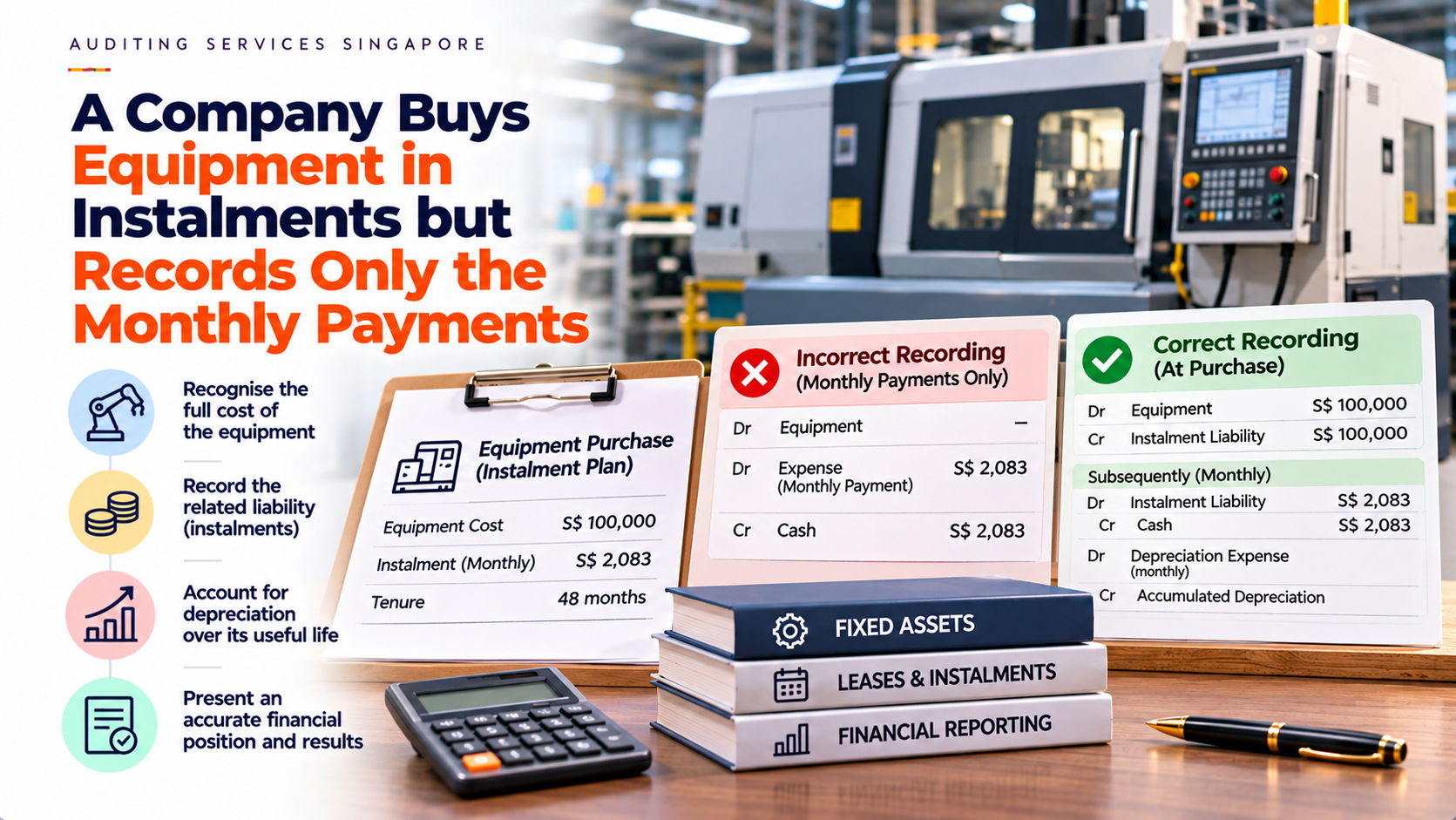
The new machine arrives, production begins and the company starts making its monthly payments. Each bank deduction is posted to an equipment expense account. The payment is consistent, the bank reconciliation balances and management assumes the accounting is complete.
At year-end, however, the fixed asset register contains no record of the machine. The remaining financing obligation is also missing. The accounts show the cash paid during the year, but they do not explain the equipment the company uses or the commitment that continues beyond the reporting date.
Paying in instalments can make a purchase easier to fund. It also creates a need to distinguish the asset, the financing arrangement and the costs recognised over time. Credon PAC’s accounting and financial reporting services are relevant to keeping these elements connected so that management can understand the full transaction.
Start With the Agreement, Not the Bank Description
A recurring bank entry usually provides very little information about the arrangement behind it. The description might name the equipment supplier, a finance company or a payment processor. It does not establish whether the company purchased equipment using a loan, entered into a lease or agreed to a package containing equipment and services.
Obtain the signed agreement, supplier invoice, repayment schedule and delivery records. Review the deposit, ownership provisions, payment term, interest, fees and any final purchase option or balloon payment. Identify maintenance or support services included in the monthly charge.
The accounting treatment depends on the substance of the arrangement and the applicable reporting framework. Calling every payment “equipment expense” bypasses that assessment. Finance needs the complete documentation before setting up the recurring entries.
Distinguish a Financed Purchase From a Lease
Where a company purchases equipment with financing, it will generally need to consider recognition of the equipment and the related financing liability. The asset’s consumption and the financing cost then need to be accounted for appropriately over time.
A lease requires a separate assessment. Under IFRS 16, many leases result in a right-of-use asset and a lease liability, subject to applicable exemptions and other requirements. A monthly rental description does not necessarily mean that recording each payment as an expense is sufficient.
Hire-purchase and similar arrangements also need review based on their terms. Legal ownership, purchase options and rights to use the equipment are relevant, but no single label resolves every case. Management should document the conclusion rather than assuming all instalment arrangements follow one standard posting method.
Understand When the Equipment Enters the Accounts
A qualifying equipment asset is not normally recognised gradually simply because the purchase price is paid gradually. Recognition depends on the relevant criteria and transaction circumstances, including whether the company has obtained the asset, rather than waiting until the final instalment clears.
Delivery and acceptance records help establish what has happened. Equipment may arrive before installation is complete, or it may undergo testing before it is ready for its intended use. These stages should be recorded clearly because acquisition, readiness for use and payment can occur on different dates.
A deposit paid before delivery also needs to be distinguished from an operational asset. Finance should track the deposit and apply it correctly when the transaction progresses. Otherwise, the company risks either omitting the equipment or counting the deposit twice.
Establish the Asset Cost Separately From Total Payments
The total of every instalment may include financing charges and services as well as the equipment price. Treating that entire amount as the equipment’s cost without review can produce an incorrect asset balance.
Under IAS 16, qualifying costs include the purchase price and directly attributable costs needed to bring equipment to the location and condition necessary for its intended operation. The applicable treatment of financing costs requires separate consideration. Finance should also distinguish qualifying installation costs from training, routine servicing and other expenditure.
Prepare a cost schedule that links each included amount to supporting documentation. Explain items excluded from the asset and how they will be recorded. This makes the treatment easier to review and helps prevent later invoices from being added to the asset merely because they mention the same machine.
See How a Purchase and Loan Fit Together
Consider a hypothetical company purchasing equipment for S$120,000. It pays a S$20,000 deposit and finances the remaining S$100,000 through a separate loan. Assume the equipment qualifies for recognition, is ready for use immediately and has no other acquisition costs. GST and financing fees are excluded for simplicity.
On those assumptions, the equipment cost is S$120,000 and the initial loan principal is S$100,000. The company does not wait until it has paid S$120,000 in cash before recording the asset. The deposit forms part of the purchase settlement rather than an additional expense.
Suppose the first loan payment is S$3,000, comprising S$2,500 of principal and S$500 of interest under the supported repayment schedule. The principal payment reduces the loan to S$97,500. The interest is accounted for separately, and the equipment’s depreciation follows its own assessment.
Separate Depreciation From Repayment
The period over which the company repays financing is not automatically the equipment’s useful life. A three-year loan may fund a machine expected to operate for six years. Conversely, a long payment term does not establish that the equipment will remain useful for that entire period.
Management should assess the asset’s expected use, residual value and appropriate depreciation method. Depreciation generally begins when the equipment is available for use, rather than when the first or final instalment is paid. Those dates should be supported by operational records.
Continuing the simplified example, a S$120,000 asset with a five-year useful life, no residual value and straight-line depreciation would have a monthly depreciation charge of S$2,000. That amount differs from the S$3,000 loan payment because depreciation and repayment measure different things.
Maintain a Financing Schedule That Agrees With the Ledger
A proper financing schedule explains the opening liability, interest, payments and closing balance for each period. Finance should reconcile that schedule to lender statements and the general ledger rather than assuming that a standing bank instruction proves the balance is correct.
Interest and principal allocations may change over the repayment term. Using the first month’s split for every subsequent payment can leave the liability misstated. Fees, revised rates or changes in payment timing may also require the schedule to be updated.
Keep the contractual cash commitments visible alongside the accounting balance. Future payments may include interest not yet recognised as part of the liability balance. Management needs to understand that distinction when comparing the ledger with the total amount still payable under the agreement.
Create a Complete Fixed Asset Record
The asset register should identify the equipment, its location, acquisition date, cost and depreciation details. Include a serial number or other identifier that allows the physical item to be matched to the records. Assign responsibility for confirming its continued use and condition.
Link the asset record to the purchase documents and relevant financing agreement. This does not mean the asset and loan balances must remain equal. It allows finance to understand which arrangement funded the item and whether restrictions affect a proposed sale or transfer.
Credon’s bookkeeping and financial reporting support can be discussed in the context of maintaining these connected records. A reliable register helps management review the equipment it operates, while a separate financing schedule explains what remains owed.
Check Bundled Services and Final Payments
Some equipment agreements combine the asset with maintenance, consumables, insurance or software access. A single monthly deduction can therefore contain amounts requiring different treatment. Finance should obtain a breakdown and assess the arrangement under the relevant requirements.
Final payments also deserve attention. A low monthly instalment may be accompanied by a substantial balloon payment, while a lease may contain renewal or purchase options. The company should understand those terms well before the agreement approaches its end.
Record important dates and expected cash commitments in the financial calendar. Management should not discover a large final payment only when the lender sends a reminder. Payment affordability needs to be assessed across the full arrangement, including any amounts due upfront or at completion.
Correct Existing Records Without Counting Payments Twice
If the company has already expensed several instalments, adding the full asset and financing balance requires a reconciliation. Finance should reconstruct the transaction from inception and identify what has already been posted.
The correction needs to consider the deposit, principal repayments, financing costs and depreciation that should have been recognised. It should also remove or reclassify entries that would otherwise duplicate those amounts. A supported schedule is more reliable than posting one unexplained adjustment to make the balances appear reasonable.
Where the issue affects previously issued financial statements, assess the appropriate correction under the applicable framework, including materiality and prior-period requirements. Do not assume that every historical error can be resolved through the current month’s expenses without further consideration.
Review What the Existing Accounts Have Told Management
Recording only monthly payments can distort more than the balance sheet. It may affect reported profit, asset-based performance measures and management’s understanding of debt. The direction and size of the distortion depend on the arrangement and the entries made.
For example, treating principal repayments as expenses can overstate some costs, while omitting depreciation or interest can create other errors. The company should quantify the actual effect rather than assuming that correcting the records will always increase or decrease profit.
Review decisions previously based on those figures where the difference is significant. Equipment profitability, borrowing capacity and spending plans may need reassessment. Management should receive a clear explanation of the corrected position and the reason the earlier reports were incomplete.
Keep Accounting Costs and Cash Commitments in View
A complete set of records helps answer two separate management questions: what the equipment costs the business over time, and how much cash is needed to meet the payment schedule. Neither view replaces the other.
The cash forecast should include the full payments when due, including principal, interest and relevant service charges. Management reporting should reflect the appropriate accounting costs and balances. A profitable month can still carry a substantial financing payment, particularly where several equipment agreements overlap.
Review the combined commitments before approving additional purchases. A manageable instalment considered alone may create pressure when added to existing loans, leases and operating obligations. The assessment should include expected benefits from the equipment without treating uncertain future revenue as guaranteed funding.
Make the Entire Purchase Visible
Equipment bought in instalments should leave a clear trail from the purchase agreement to the asset register, financing schedule and bank payments. Recording the cash deduction is part of that process, but it does not explain the full financial position.
Management should be able to identify the equipment recognised, the basis of its depreciation, the financing balance and the payments still to come. It should also understand any service components, final payment obligations or restrictions affecting the asset. These records support both accurate reporting and better purchasing decisions.
If monthly equipment payments are being recorded without a supporting asset or financing schedule, discuss the arrangement with Credon PAC. Bring the signed agreement, supplier invoice, deposit records and payment history so that the accounting position can be reviewed and the records brought into a consistent form.